An unplanned machine stoppage on the production floor costs far more than the repair itself — it means lost output, penalties for missed orders, and emergency overtime service. Predictive maintenance (PdM) reverses this scenario: real-time machine condition monitoring systems detect failure symptoms — rising bearing vibration, a heating electrical connection, a shifting motor current signature — weeks or months before an actual breakdown. This article explains how such systems are implemented in practice, what technologies power them, and why combining equipment sales with industrial electronics service is a model that works best for both sides — the solution manufacturer and the end client.
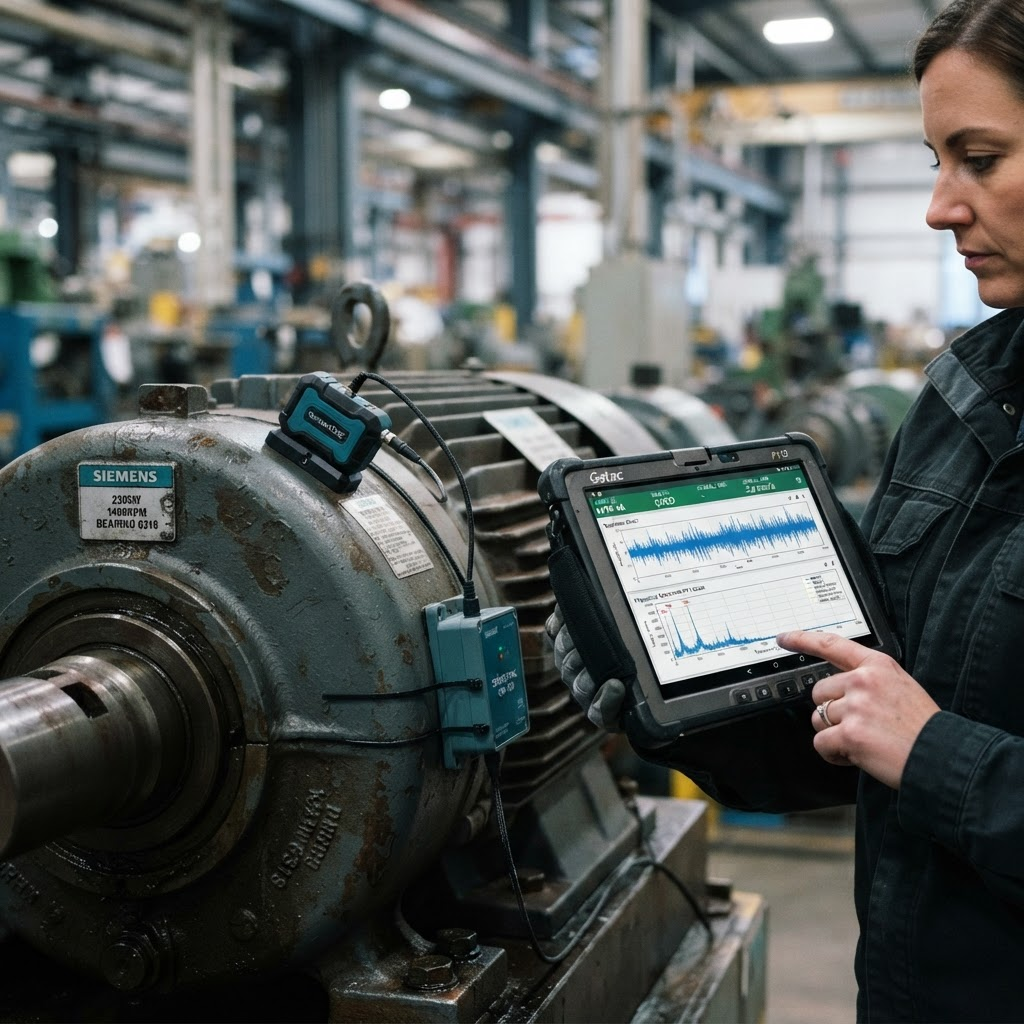
What Is Predictive Fault Detection and Why It Beats Reactive Maintenance
Traditional maintenance relies on two models: reactive (repair after failure) and scheduled (inspections at fixed intervals, regardless of actual component condition). Both have drawbacks — reactive maintenance causes unplanned downtime, scheduled maintenance leads to replacing still-functional parts or missing a fault between inspections. Predictive maintenance monitors the machine's actual real-time condition and triggers a repair exactly when needed — not sooner, not later.
Machine Condition Monitoring Technologies
| Technology | What it detects | Typical application |
|---|---|---|
| Vibration analysis (accelerometers) | Bearing wear, rotor imbalance, shaft misalignment, gear damage | electric motors, pumps, fans, compressors, gearboxes |
| Industrial thermal imaging | Overheating electrical connections, overloaded contactors, worn brushes, insulation leaks | electrical cabinets, switchgear, motors, frequency inverters |
| MCSA — Motor Current Signature Analysis | Broken rotor bars, bearing damage, power supply issues | induction motors, pump and fan drives |
| Oil and lubricant analysis | Metallic contamination, lubricant degradation, water presence | gearboxes, compressors, turbines, hydraulic units |
| Acoustic emission (ultrasonics) | Compressed air and gas leaks, early-stage bearing wear | pneumatic installations, low-speed bearings |
| IoT + AI platforms (anomaly detection) | Deviations from normal operating patterns detected algorithmically across multiple sensors | entire production lines, PLC/SCADA integration |
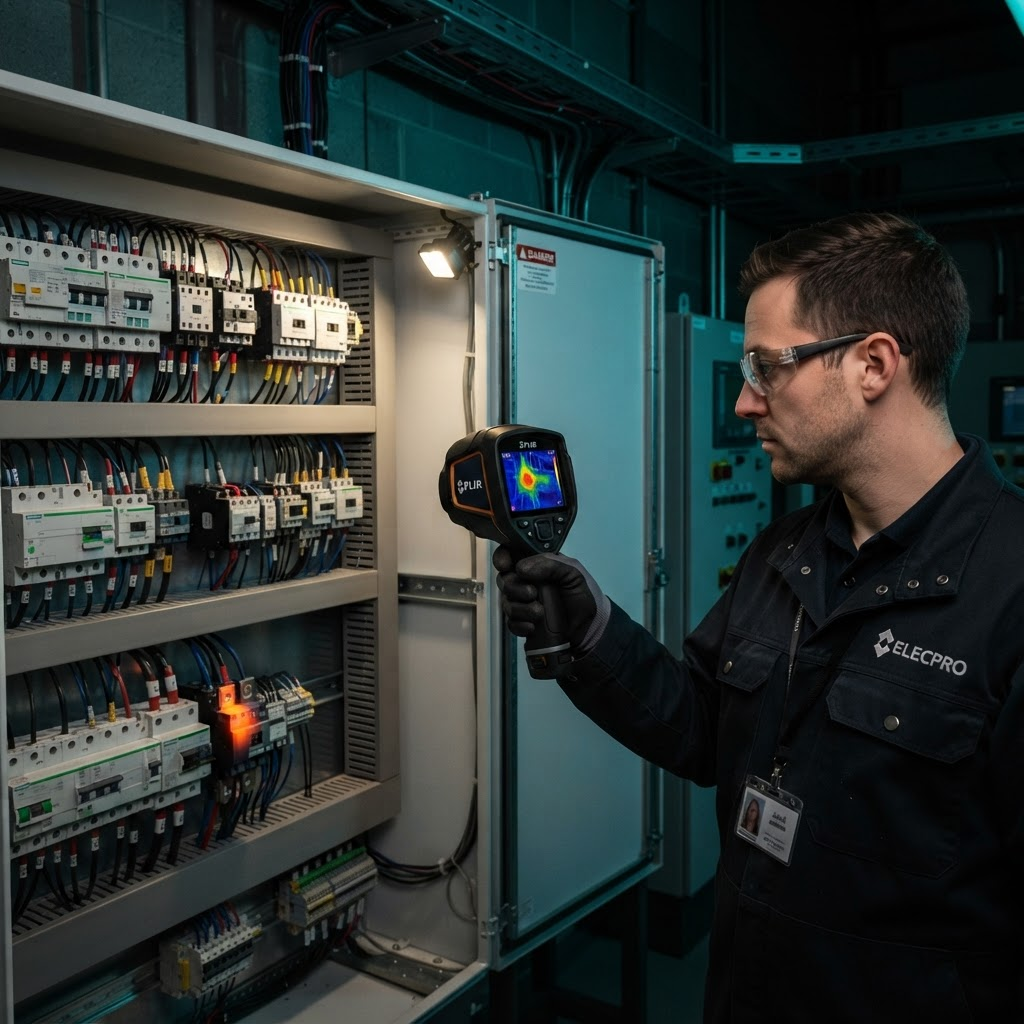
Which Machines and Components Are Typically Covered by Predictive Monitoring
- Industrial electric motors, pumps, and fans
- Screw and reciprocating compressors
- Gearboxes and transmissions
- Bearings in production lines and conveyors
- Frequency inverters (drives) and servo systems
- PLC controllers and power cabinets on critical production lines
This is the same industrial electronics domain we work in every day as a repair service — inverters, servo drives, PLC controllers, HMI panels. Knowing the real root causes of failure in these components lets us interpret predictive monitoring data more accurately than a company that only sells sensors without hands-on repair experience with what those sensors monitor.
How a Predictive Maintenance Rollout Works — Step by Step
- Machine criticality audit: identifying equipment whose failure generates the highest downtime cost — that's where monitoring delivers the highest return on investment.
- Technology and sensor selection: matching the monitoring method (vibration, thermal, MCSA, IoT) to the machine type and the client's budget.
- Sensor installation and integration with existing infrastructure: mounting on machines, connecting to CAN/Modbus/Profibus or a wireless IoT network, integrating with the existing PLC or SCADA system.
- Alarm threshold configuration: setting limit values for each parameter based on reference data from the machine in healthy condition.
- Continuous monitoring and data interpretation: trend analysis, early warnings before a critical threshold is crossed.
- Fast service response: when the system detects an anomaly, our team already has the knowledge and spare parts to perform the repair before a breakdown occurs — that's the advantage of a model combining sales with service.

For Manufacturers of Predictive Maintenance Solutions — We're Looking for a Partnership
If you manufacture vibration sensors, thermal imaging cameras, IoT machine condition monitoring platforms, or predictive analytics software, and you're looking for a sales and service partner in Poland and Central Europe — we have exactly what you need to scale sales: a technical team with real industrial electronics expertise (PLC, drives, servo systems, HMI), an established industrial client network, and the ability to deliver a complete implementation — from sensor installation to repairing the component that sensor flagged as damaged. This is a model where your product doesn't end up in a drawer after the sale, because the client gets a complete service, not just a device.
We offer: sales representation in the Polish and Central European market, installation and rollout at the end client's site, warranty and post-warranty service, and above all — the technical knowledge that lets us sell your solution as part of a complete maintenance service, not as a standalone gadget.
For End Clients — Implementing Predictive Monitoring on Your Production Floor
If you manage maintenance at a production facility and want to reduce unplanned downtime, we'll help you choose the right monitoring technology, carry out the installation, and integrate it with your existing PLC/SCADA infrastructure — and then keep the system running, including repairing any component the predictive system flags as at risk. You don't need to find a sensor supplier and an electronics repair service separately — we combine both roles.
Service Area
We provide rollout and service work for clients across Poland and Europe, with our operational base in Knurow, Silesia. Contact us by phone, WhatsApp, or email — the scope and quote for each implementation are determined individually after a machine audit.
FAQ
- How does predictive monitoring differ from ordinary alarm sensors on a machine?
- Alarm sensors detect a failure once it has already occurred (e.g. overheating). Predictive monitoring analyzes the trend of a parameter's change long before a critical value is crossed, giving time for a planned repair.
- Can a predictive system be integrated with an existing PLC or SCADA setup?
- Yes, most IoT condition monitoring platforms communicate over Modbus, Profibus, or industrial Ethernet protocols, allowing integration with existing infrastructure without replacing controllers.
- I manufacture predictive sensors/software — how do I start a partnership?
- Contact us by phone, WhatsApp, or email — we'll define the scope of sales and service cooperation in the Polish and Central European market.
- Which machines are most worth covering with predictive monitoring?
- Those whose failure generates the highest downtime cost — typically motors and gearboxes on lines without redundancy, compressors feeding an entire installation, and critical inverter-driven systems.